
Overview
MetroLink Tulsa is the primary public transportation provider for Tulsa, Oklahoma. Like many agencies, it runs recurring work bids that determine how bus drivers select their work assignments for an upcoming period. Historically, this process relied entirely on paper: physical bid sheets, in-person selection windows, and manual tracking by office staff. With drivers spread across routes and shifts, coordinating the process was time-consuming and error-prone.
Seeking a more efficient, modern approach, MetroLink Tulsa implemented the Optibus Driver Portal and Digital Bidding. The results of their first digital bids exceeded expectations: strong driver adoption, enthusiastic union support, and a clear path toward fully paperless operations.
Challenge
Under the traditional process, drivers were required to appear in person during a strict 15-minute selection window and choose from paper bid sheets posted on a physical board. Office staff manually tracked progress, managed real-time schedule changes, and fielded a constant stream of phone calls and walk-ins. Delays cascaded unpredictably, leaving both staff and drivers uncertain about timing.
Beyond the logistical burden, there was a cultural challenge to adopting online bidding: drivers were accustomed to a familiar (if cumbersome) paper process and were skeptical of change. Introducing a digital tool on personal devices, with real consequences for missing a bid window, required careful handling to earn driver trust.
Solution
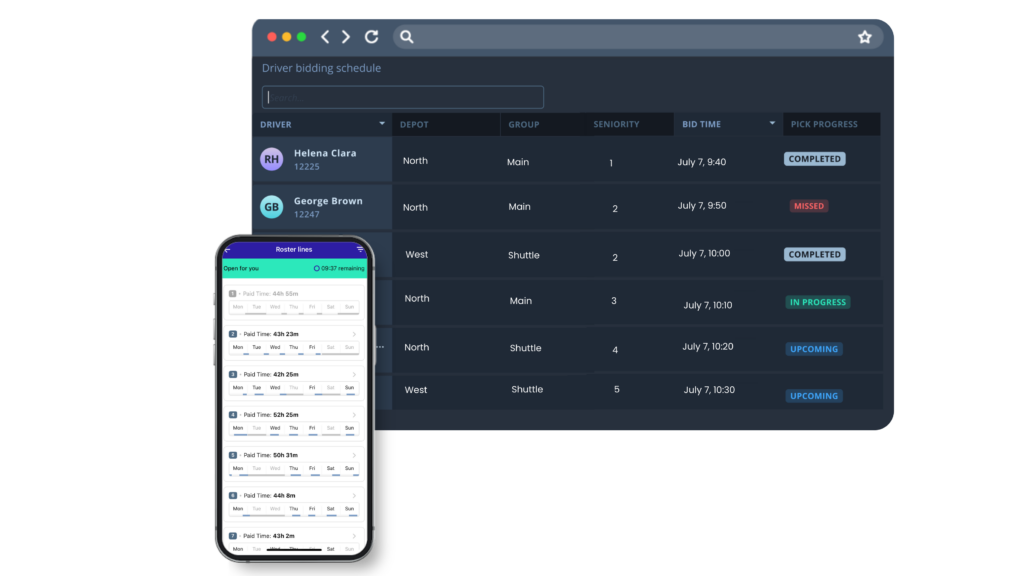
MetroLink Tulsa implemented Optibus for its work bids, allowing bus operators to view available work assignments and submit selections from their personal mobile phones. Implementation was a collaborative effort from the start, with a core team (Naaja Jefferies, Nate Stewart, Casey Graves, Ofir Bar, and Curtis Griggs) working closely with Optibus on bidding configuration, driver app setup, and workflow mapping, collectively troubleshooting issues as they arose.
Critically, the team made a deliberate decision to bring the union in first, giving representatives early access to the app during testing so they could experience it firsthand before the wider rollout.
That early buy-in proved decisive. Union members became advocates, smoothing adoption across the driver pool.
The first bid was run as a deliberate parallel process to ease the change management curve. Drivers were given access to the app ahead of the bid to browse their options, but selections were still submitted in person and recorded digitally via roster allocation in ops. Naaja and Nate led the execution on the ground, staying hands-on throughout. The parallel run gave drivers a low-stakes first encounter with the app and set the stage for full digital adoption in subsequent rounds.
By the next bid, the majority of drivers were using the app to monitor the process in real time by tracking which assignments were still available as the bid progressed, while 24 of them submitted their picks entirely through the app.
Results
Strong first-round adoption
Nearly two dozen drivers completed the bid entirely digitally in the very first rollout, a strong signal for future participation.
Union as a force multiplier
By involving union representatives early in testing, the operator turned a potential point of resistance into one of its strongest sources of advocacy.
Real-time visibility improved the experience
Drivers used the app not just to bid, but to monitor the process: watching assignments fill in real time and adjusting their preferences accordingly. Live visibility was among the most positively received features.
A clear path to paperless
With a few successful digital bids completed, MetroLink Tulsa is well-positioned to eliminate paper entirely from the process in future rounds.